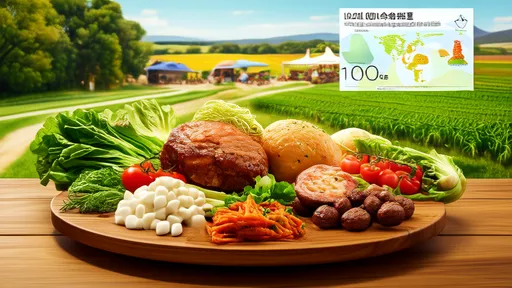
As climate concerns intensify, the concept of the 100-kilometer diet has gained traction among environmentalists, policymakers, and conscious consumers. This approach advocates sourcing food predominantly from within a 100-kilometer radius of one's location, aiming to reduce the carbon footprint associated with long-distance transportation, refrigeration, and packaging. The viability of such a dietary shift, however, hinges on a complex interplay of agricultural practices, economic structures, and cultural habits. This report delves into the feasibility of adopting a 100-kilometer food system, examining its potential benefits, inherent challenges, and the realistic pathways for its implementation in our modern world.
The environmental argument for localizing our food sources is compelling. The global food system is a significant contributor to greenhouse gas emissions, with transportation accounting for a substantial portion. Food miles—the distance food travels from farm to plate—have skyrocketed with globalization, meaning a simple meal can have a carbon footprint equivalent to a short car trip. By drastically shortening these supply chains, a 100km diet seeks to eliminate a large segment of these emissions. Beyond CO2, localized systems often encourage more sustainable farming methods. Smaller, regional farms are frequently more inclined to adopt organic, regenerative, or polyculture practices that enhance soil health and biodiversity, compared to the monoculture operations that dominate industrial agriculture. This creates a positive feedback loop: healthier soils sequester more carbon, further mitigating the overall climate impact of food production.
Furthermore, the potential economic and social revitalization cannot be overlooked. Channeling consumer expenditure into local farms and food businesses keeps capital within the community, fostering economic resilience. It strengthens the connection between consumers and producers, building a foundation of trust and transparency that is often absent in anonymous global supply chains. Consumers gain a clearer understanding of how and where their food is grown, while farmers receive more direct feedback and a fairer share of the profits. This model can help preserve agricultural land from urban development and sustain rural communities, maintaining not just an economy but a way of life that is deeply intertwined with the land.
Despite its appealing premise, the wholesale adoption of a strict 100km diet faces formidable obstacles. The most significant is the issue of seasonality and variety. Temperate climates experience winters where local production of fresh fruits and vegetables grinds to a halt. A diet restricted to a narrow radius would become incredibly limited and nutritionally deficient for large portions of the year, relying heavily on stored root vegetables and preserved goods. This clashes with the modern consumer's expectation of having access to a wide array of fresh produce year-round, an expectation currently met by global imports. Completely forgoing coffee, chocolate, citrus fruits, spices, and other goods that simply cannot be grown in most regions would be a difficult cultural shift for many to accept.
Another critical challenge lies in the efficiency of scale. While long-distance transport has a carbon cost, it is not the sole factor in a food's footprint. The mode of transport is crucial. Shipping a ton of goods by sea freight emits far less CO2 per kilometer than transporting it a shorter distance by truck. In some cases, it can be more carbon-intensive to grow a product locally in energy-intensive greenhouses than to import it from a region where it grows naturally in open fields. The concept of carbon efficiency must therefore be applied to the entire production process, not just the final journey. Large-scale centralized processing and distribution can sometimes be more energy-efficient than fragmented local operations, complicating the simplistic "local is always better" narrative.
Infrastructure presents another major hurdle. Our current food infrastructure is built for globalized, industrialized efficiency. It comprises massive grain silos, centralized packing houses, international shipping ports, and continent-spanning trucking networks. Building a parallel, localized system would require immense investment in regional processing facilities, cold storage, and distribution networks capable of handling a diverse array of products from many small suppliers instead of a few large ones. This transition would not happen overnight and would need significant coordination and financial backing from both the public and private sectors.
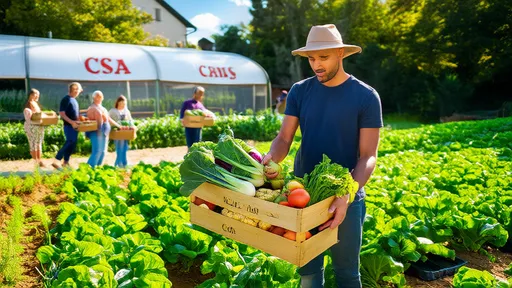
Given these complexities, a more pragmatic approach than a rigid 100km rule may be necessary. The goal should not be absolutism but a significant reduction in food miles and a conscious shift towards more sustainable choices. This could manifest as a 80/20 approach, where 80% of one's diet is sourced from within the region when seasonally possible, while allowing for 20% of imports for necessities and treats that cannot be produced locally. This balances environmental ambition with practical reality. Technology can also play a key role in enabling this transition. Online farmers' markets, community-supported agriculture (CSA) box schemes, and apps that connect consumers directly with local producers are already making it easier to source food locally.
Policy will be indispensable in shaping a feasible local food future. Governments can incentivize the transition through subsidies for sustainable local farming rather than industrial monocultures, grants for building regional food hubs and processing facilities, and investing in research for extending seasonal availability through eco-friendly methods like seasonal extension hoops. Urban planning policies can support urban agriculture and farmers' markets, while public procurement programs for schools and hospitals can create massive, stable demand for local producers, helping to scale their operations and reduce costs.
In conclusion, the 100-kilometer diet serves as a powerful ideal—a north star guiding us toward a more resilient and low-carbon food system. Its absolute implementation as a universal mandate is likely unfeasible and potentially counterproductive from a total carbon accounting perspective. However, its core principles are sound and urgently needed. The true feasibility lies not in strict adherence to a arbitrary radius, but in a collective movement towards re-localizing a substantial portion of our food consumption. It is about smarter sourcing, embracing seasonality, supporting community farmers, and making conscious choices that reduce our dietary footprint. By weaving together consumer action, technological innovation, and supportive policy, we can move from a globalized food system that is efficient but fragile to a distributed one that is resilient, sustainable, and deeply connected to the places we call home.

By /Aug 29, 2025

By /Aug 29, 2025

By /Aug 29, 2025

By /Aug 29, 2025

By /Aug 29, 2025
By /Aug 29, 2025

By /Aug 29, 2025

By /Aug 29, 2025
By /Aug 29, 2025
By /Aug 29, 2025

By /Aug 29, 2025

By /Aug 29, 2025

By /Aug 29, 2025

By /Aug 29, 2025

By /Aug 29, 2025

By /Aug 29, 2025

By /Aug 29, 2025

By /Aug 29, 2025

By /Aug 29, 2025

By /Aug 29, 2025