The global food system has long operated on a foundation of aesthetic perfection, discarding up to one-third of all produce solely for cosmetic imperfections. This practice, deeply embedded in agricultural supply chains for decades, has created a staggering economic and environmental burden. In recent years, however, a powerful counter-movement known as the "Ugly Food Movement" has emerged, challenging these norms and advocating for the commercial viability of misshapen fruits and vegetables. While the ethical and environmental arguments for this shift are compelling, the transition necessitates a fundamental and costly restructuring of the existing supply chain. This analysis delves into the intricate economic ledger of this movement, examining the capital required to rebuild a system designed for uniformity to one that embraces diversity.
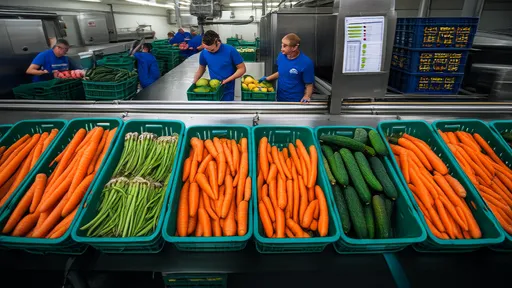
The traditional supply chain, a well-oiled machine built for efficiency and standardization, is ill-equipped to handle non-uniform produce. From the moment a carrot is forked from the ground or an apple is plucked from a tree, it enters a rigid system of sorting, grading, packaging, and transportation predicated on specific size, shape, and color criteria. The infrastructure—conveyor belts, optical sorters, grading rings, and crates—is calibrated for homogeneity. Introducing aesthetically challenged produce into this system creates immediate friction and cost. These items cannot be processed at the same speed; they may require manual sorting, different packaging solutions to prevent bruising, and they often have different shelf-life characteristics, complicating logistics and inventory management. The initial investment to retrofit packing houses with more flexible technology and to retrain personnel is a significant, upfront capital expenditure that many operators are hesitant to bear without a guaranteed market return.
Perhaps the most substantial financial hurdle lies in marketing and consumer education. For generations, consumers in developed nations have been conditioned to equate perfect appearance with quality, safety, and value. Deconstructing this deeply ingrained psychology requires a sustained and well-funded marketing campaign. Successful ventures in the ugly food sector, such as Imperfect Foods or Misfits Market, have spent millions on branding that reframes the narrative around these products, emphasizing their authenticity, environmental benefit, and cost savings. This involves not just advertising but also educational content about food waste and the realities of farming. The economic cost here is twofold: the direct expense of the marketing campaigns themselves and the strategic pricing of the goods. These products are typically sold at a 20-30% discount compared to their "perfect" counterparts, a necessary tactic to incentivize trial and purchase. This discount directly impacts profit margins, meaning a greater volume must be sold to achieve the same revenue, placing pressure on the entire operational model.
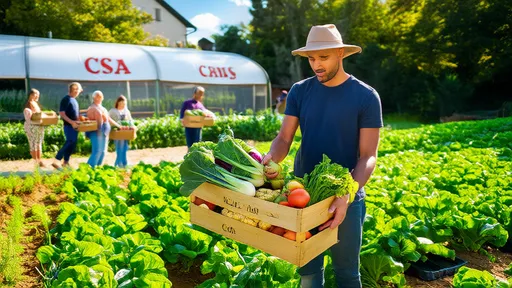
The logistical framework for distributing ugly produce is inherently different and often more complex than the traditional model. Standard supply chains are linear, moving large, uniform volumes from farms to distributors to large supermarket chains. The ugly food model, however, often thrives on alternative distribution channels. It frequently relies on direct-to-consumer subscription boxes or partnerships with smaller grocery chains, restaurants, and food service companies that prioritize sustainability. Building these new distribution networks from the ground up requires massive investment. It involves developing sophisticated software for subscription management, route optimization for delivery trucks serving dispersed residential addresses, and establishing new relationships with a different class of buyers. The economies of scale achieved by shipping twenty pallets to a single warehouse do not apply when shipping twenty thousand individual boxes to twenty thousand different doorsteps. This results in higher per-unit costs for packaging and transportation, eroding the cost advantages gained at the farm gate.
On the production side, the economic equation for farmers is complex. On one hand, the ugly food movement creates a new revenue stream for produce that would otherwise be tilled under or left to rot, representing pure profit on marginal land and resources already expended. This can significantly improve a farm's overall profitability and reduce waste management costs. However, integrating this new channel into existing operations is not without its costs. It requires additional labor for separate harvesting and sorting processes. Farmers must manage two parallel harvests: one for the traditional market and one for the ugly produce market. This demands more time, labor, and administrative overhead. Furthermore, navigating contracts with ugly produce startups can be risky; these companies are often young and their demand can be volatile, unlike the predictable, large-volume contracts from established supermarket chains. The opportunity cost of dedicating resources to a less stable market is a real economic consideration for risk-averse farmers.
Despite these formidable reconstruction costs, the economic benefits present a compelling case for investment. The most obvious is the creation of an entirely new market segment with its associated revenue streams. Companies operating in this space are tapping into a multi-billion dollar opportunity by monetizing waste. For society at large, the cost savings are profound. Reducing food waste translates to more efficient use of resources: water, land, fertilizers, and labor that were already invested in growing the food. This has a direct, positive impact on environmental mitigation costs. Municipalities spend vast sums on waste collection and landfill management; diverting organic waste reduces these public expenses. On a macroeconomic level, reducing food waste improves overall food security and resource efficiency, making the entire food system more resilient and less costly in the long term.
The journey to normalize ugly produce is, therefore, a classic example of a high initial investment yielding significant long-term returns, both financial and societal. The reconstruction costs—retooling infrastructure, reshaping marketing strategies, and building new logistics networks—are substantial and act as a barrier to entry. However, these are largely one-time capital costs to build a new system. The ongoing operational costs of running this parallel, anti-waste supply chain are increasingly being justified by consumer demand, regulatory pressures against food waste, and the sheer economic upside of selling previously worthless product. The movement is not just about selling crooked carrots; it is about building a more rational, efficient, and ultimately cheaper food economy. The economic ledger, when viewed holistically and with a long-term perspective, shows that the cost of rebuilding the supply chain is far less than the perpetual cost of maintaining a wasteful one.

By /Aug 29, 2025

By /Aug 29, 2025

By /Aug 29, 2025

By /Aug 29, 2025

By /Aug 29, 2025

By /Aug 29, 2025

By /Aug 29, 2025

By /Aug 29, 2025
By /Aug 29, 2025
By /Aug 29, 2025

By /Aug 29, 2025

By /Aug 29, 2025

By /Aug 29, 2025

By /Aug 29, 2025

By /Aug 29, 2025

By /Aug 29, 2025

By /Aug 29, 2025

By /Aug 29, 2025

By /Aug 29, 2025

By /Aug 29, 2025