Direct Farm Delivery Model: Operational Challenges and Breakthroughs in Community Supported Agriculture (CSA)

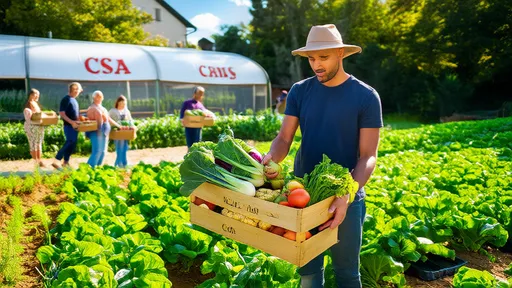
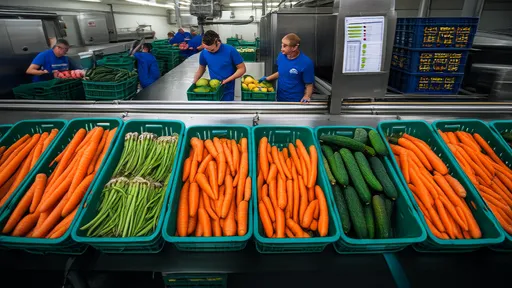
In the quiet predawn hours, while most households still slumber, a different kind of rhythm pulses through the heart of Community Supported Agriculture. Farmers move with practiced efficiency under the stark glow of warehouse lights, their hands swiftly sorting just-picked carrots, bundling vibrant kale, and carefully nestling fragile eggs into cartons. This weekly ritual, repeated across thousands of farms, forms the backbone of a movement that promised to redefine our relationship with food. The CSA model emerged as a beacon of agricultural idealism—a direct partnership between grower and eater that promised freshness, transparency, and sustainability. Yet behind the crates of radiant produce lies a complex web of challenges that threaten the very foundations of this beloved system.

The romantic ideal of community-supported agriculture often collides with the stark realities of small-scale farming. Members sign up in spring, captivated by visions of overflowing baskets of perfect tomatoes and crisp greens, but few truly comprehend the immense gamble farmers take with each planting. Unlike traditional retail operations where risk is distributed across global supply chains, CSA farmers bear the full brunt of nature's unpredictability. A week of torrential rains during pollination can decimate the squash harvest. An unexpected frost in May might wipe out the entire tomato crop. While conventional supermarkets would simply source from another region, the CSA farmer must face their community with half-empty boxes and disappointed members. This vulnerability creates constant financial pressure that many operations struggle to withstand year after year.

Member retention poses another significant challenge that many CSA programs grapple with silently. The initial enthusiasm that brings households to sign up often wanes as the season progresses and the reality of weekly pickups sets in. Life gets busy, vacations happen, and sometimes people simply grow tired of yet another bunch of kale. This "vegetable fatigue" is more than just an inconvenience—it represents a fundamental mismatch between the steady output of a farm and the variable desires of modern consumers. Unlike grocery shopping where choice reigns supreme, CSA members surrender their selection to the season's offerings. This requires both culinary creativity and a philosophical commitment to eating what the land provides, qualities that not all consumers possess in our era of endless food options.

The logistical complexities of running a CSA would stagger most outside observers. Unlike wholesale farming where produce moves in pallet-sized quantities to few locations, CSA operations must assemble hundreds of individualized shares each week and coordinate distribution across multiple pickup sites. Each basket represents a custom assembly job requiring careful attention to portion sizes, variety, and fragility of items. The transportation logistics alone would challenge a seasoned operations manager—maintaining proper temperatures during transit, ensuring timely arrivals at dispersed locations, and managing the flow of members during pickup windows. These operational demands often fall to farmers whose expertise lies in soil health and plant physiology, not supply chain management and customer service protocols.

Financial sustainability remains perhaps the most pressing concern. Setting membership fees requires navigating a delicate balance between covering true production costs and remaining accessible to community members. Many farmers, passionate about food justice and community access, price their shares below what the market would actually bear. This well-intentioned practice often leads to chronic undercapitalization that prevents investment in labor-saving equipment or professional management systems. The seasonal nature of payments—with most revenue arriving in spring—creates cash flow challenges during the critical planting months when expenses mount rapidly. Without access to traditional financing options that favor consistent revenue streams, many CSA operations operate on a financial knife's edge.

Despite these significant challenges, innovative farmers are developing creative strategies to reinvigorate the CSA model. Some operations have moved beyond the traditional weekly box to offer more flexible membership options. Customizable shares allow members to select items that match their preferences and dietary needs, reducing food waste and increasing satisfaction. Others have introduced rollover credits for missed weeks or vacation holds that accommodate modern lifestyles without compromising the farm's financial stability. These adaptations acknowledge that while the core values of community support remain vital, the practical implementation must evolve with changing consumer expectations.

Technology integration represents another promising frontier for CSA operations. Modern software solutions now exist specifically for small farms managing community shares. These platforms handle everything from member communications and payment processing to harvest planning and distribution logistics. Some forward-thinking farms have developed mobile applications that allow members to customize their boxes, swap items they don't want, and access cooking suggestions for unfamiliar vegetables. This technological layer reduces administrative burdens on farmers while enhancing the member experience through greater convenience and engagement.

Educational components have emerged as powerful tools for strengthening the farmer-member relationship. Farms that invest in regular newsletters with cooking tips, recipes, and stories about what's happening in the fields report higher member retention and satisfaction. Some host seasonal farm dinners or offer optional workshops on preservation techniques like canning and fermenting. These initiatives transform the transaction from simple produce provision to a richer educational exchange that helps members develop deeper connections to their food and the land it comes from. This added value helps justify the premium prices that sustainable farming requires.

Diversification of revenue streams offers another path toward financial resilience. Many successful CSAs now complement their core vegetable shares with value-added products like preserves, fermented vegetables, and baked goods. Others have developed parallel wholesale relationships with local restaurants or retailers that can absorb surplus production. Some farms have created tiered pricing structures that include "solidarity shares" where wealthier members subsidize reduced-cost shares for low-income families. This approach maintains commitment to accessibility while creating a more sustainable financial model.

The future of Community Supported Agriculture may lie in reimagining what "community support" truly means. It's evolving from a simple transactional relationship into a more holistic partnership where members understand themselves as active participants in the food system rather than passive consumers. This shift in perspective transforms the challenges of seasonality and variability from drawbacks into valued features of eating in rhythm with nature. When members celebrate the first tender asparagus of spring or patiently await the ripening of the fall tomatoes, they're not just receiving food—they're participating in the ancient dance of the seasons.

This renewed vision for CSA requires farmers to become not just growers but educators and community organizers. It asks members to embrace not just the bounty but the limitations of their local landscape. The breakthrough comes when both parties recognize that they're co-creating something more valuable than perfect produce—they're building a resilient local food culture that can withstand the uncertainties of our changing world. The boxes of vegetables become merely the tangible manifestation of this deeper exchange of value between land and community.

As the sun rises over fields dotted with farmers tending their crops, the true potential of community-supported agriculture comes into focus. It was never just about distributing vegetables efficiently. At its heart, the CSA model represents a radical act of faith—in the land, in each other, and in the possibility of building food systems rooted in mutual care rather than anonymous transaction. The operational challenges are real and significant, but the creative responses emerging from farms across the country suggest that this decades-old model still has remarkable relevance—if we're willing to adapt its form while preserving its soul.

Recommend Posts
Food

Plant-based 3.0 Era: Organized Formation Technology of Fungal Protein and Algae

By /Aug 29, 2025

The landscape of alternative proteins is undergoing a seismic shift, moving decisively into what industry pioneers are terming Plant-Based 3.0. This new era transcends the simple imitation of meat textures with isolated proteins and starches, focusing instead on creating whole-muscle analogues with complex, fibrous architectures that genuinely mirror the eating experience of animal meat. At the vanguard of this revolution are two powerful biological workhorses: mycoprotein and microalgae. The technological race is no longer just about ingredient sourcing; it is fiercely centered on the sophisticated art and science of texturization—transforming these microbial biomasses into convincing steaks, fillets, and chunks.
Food

Snackification Trend: Product Design Logic of Nutrition Bars and Shakes

By /Aug 29, 2025

The landscape of snacking is undergoing a profound transformation, shifting from mere indulgence to a purposeful act of nourishment. The rise of snackification, where traditional meals are replaced by convenient, nutrient-dense alternatives, has propelled products like nutrition bars and shakes into the spotlight. No longer just for athletes or dieters, these items are now staples for busy professionals, health-conscious millennials, and anyone seeking a quick yet balanced intake. This trend reflects a broader cultural move towards efficiency without compromise—where food must deliver both convenience and wellness, aligning with modern lifestyles that prioritize time and health equally.
Food

The Evolution of Social Contracts Behind Table Manners: Anthropology of Communal Eating

By /Aug 29, 2025

In the dim light of ancient fires, our ancestors tore meat from bone with their teeth and hands, sharing not just sustenance but the very essence of social bonding. This primal act of commensality—eating together—laid the foundational stones for what would become one of humanity’s most complex and revealing social rituals: the shared meal. Across millennia, the table has transformed from a simple surface for consumption into a stage where social contracts are performed, negotiated, and evolved. The anthropology of eating together reveals that table manners are far more than arbitrary rules of etiquette; they are the visible expression of deeply ingrained social agreements that dictate hierarchy, trust, reciprocity, and cultural identity.
Food

Food Education Curriculum Standards: The Practical Application of Japan's Basic Law on Food Education"

By /Aug 29, 2025

In the landscape of global education reform, Japan's integration of its Shokuiku (Food Education) Basic Law into classroom practice stands as a pioneering model of policy-driven curricular transformation. Enacted in 2005, the law emerged from growing concerns over dietary imbalances, the loss of traditional food culture, and increasing lifestyle-related health issues among the Japanese population. Rather than remaining a lofty legislative document, it has been dynamically translated into a living, breathing educational framework that touches the lives of students, teachers, families, and communities. This practical conversion of law into learning offers a compelling case study in how national policy can effectively shape daily educational experiences and cultivate long-term societal values.
Food

Neuroscience of Comfort Food: Dopamine Release and the Activation Mechanism of Emotional Memory

By /Aug 29, 2025

In the quiet corners of our minds, certain foods hold a power that transcends mere sustenance. They are not just fuel; they are emotional anchors, capable of transporting us across decades with a single taste or aroma. This phenomenon, often dismissed as simple nostalgia, is in fact a deeply complex neurological process. It is the intricate dance of neurotransmitters, emotional memory, and primal reward systems that transforms a humble bowl of macaroni and cheese or a warm slice of apple pie into a potent source of psychological solace. The science behind why we turn to specific foods for comfort is a fascinating exploration into the very wiring of our brains and the formation of our deepest emotional bonds.
Food

Feasibility Study on Local Food Carbon Footprint: The Viability of a 100-Kilometer Diet Circle

By /Aug 29, 2025

As climate concerns intensify, the concept of the 100-kilometer diet has gained traction among environmentalists, policymakers, and conscious consumers. This approach advocates sourcing food predominantly from within a 100-kilometer radius of one's location, aiming to reduce the carbon footprint associated with long-distance transportation, refrigeration, and packaging. The viability of such a dietary shift, however, hinges on a complex interplay of agricultural practices, economic structures, and cultural habits. This report delves into the feasibility of adopting a 100-kilometer food system, examining its potential benefits, inherent challenges, and the realistic pathways for its implementation in our modern world.
Food

Regulation of Functional Foods: Legal Boundaries of Health Claims in Major Global Markets

By /Aug 29, 2025

The global functional foods market continues to expand at a remarkable pace, driven by increasing consumer awareness of health and wellness. However, the regulatory landscape governing health claims remains a complex and fragmented terrain across major markets. Companies navigating this space must tread carefully, as the legal boundaries for what can be claimed on packaging and in advertising vary significantly from region to region.
Food

Zero Waste Practice Report: A Practical Guide to Kitchen Waste Composting and Vermiculture Towers

By /Aug 29, 2025

In the quiet revolution against waste, two humble heroes have emerged from the soil itself—compost bins and worm towers. These aren’t just trendy sustainability buzzwords; they are practical, powerful tools that transform what we often dismiss as "trash" into black gold for our gardens and communities. Across backyards, balconies, and even urban farms, people are discovering that managing organic waste doesn’t require complex technology or expensive systems. It requires little more than intention, basic materials, and a partnership with nature’s most efficient decomposers.
Food

Direct Farm Delivery Model: Operational Challenges and Breakthroughs in Community Supported Agriculture (CSA)

By /Aug 29, 2025

In the quiet predawn hours, while most households still slumber, a different kind of rhythm pulses through the heart of Community Supported Agriculture. Farmers move with practiced efficiency under the stark glow of warehouse lights, their hands swiftly sorting just-picked carrots, bundling vibrant kale, and carefully nestling fragile eggs into cartons. This weekly ritual, repeated across thousands of farms, forms the backbone of a movement that promised to redefine our relationship with food. The CSA model emerged as a beacon of agricultural idealism—a direct partnership between grower and eater that promised freshness, transparency, and sustainability. Yet behind the crates of radiant produce lies a complex web of challenges that threaten the very foundations of this beloved system.
Food

Cost Analysis of Rebuilding the Deformed Fruit and Vegetable Supply Chain: The Ugly Food Movement

By /Aug 29, 2025

The global food system has long operated on a foundation of aesthetic perfection, discarding up to one-third of all produce solely for cosmetic imperfections. This practice, deeply embedded in agricultural supply chains for decades, has created a staggering economic and environmental burden. In recent years, however, a powerful counter-movement known as the "Ugly Food Movement" has emerged, challenging these norms and advocating for the commercial viability of misshapen fruits and vegetables. While the ethical and environmental arguments for this shift are compelling, the transition necessitates a fundamental and costly restructuring of the existing supply chain. This analysis delves into the intricate economic ledger of this movement, examining the capital required to rebuild a system designed for uniformity to one that embraces diversity.
Food

Sonication Cavitation Effect: Mechanism of High-Frequency Vibration on the Structural Alteration of Ingredients

By /Aug 29, 2025

The culinary world is perpetually in flux, with innovation often arriving from the most unexpected quarters. One such frontier, emerging not from the stovetop but from the laboratory, is the application of ultrasonic cavitation. This sophisticated physical phenomenon, long a tool in industrial cleaning and medical therapy, is now demonstrating a profound capacity to transform the very architecture of our food. By harnessing high-frequency sound waves, chefs and food scientists are beginning to manipulate textures, intensify flavors, and accelerate processes in ways previously confined to science fiction, heralding a new era of precision gastronomy.
Food

Analysis of Kitchen Measurement Errors: The Correlation between Electronic Scale Accuracy and Baking Success Rates

By /Aug 29, 2025

In the quiet hum of a home kitchen, where flour dusts the air like winter’s first snow and the warm scent of vanilla promises comfort, a silent revolution has been unfolding. For decades, bakers—both amateur and professional—have debated the merits of measuring by volume versus weight. The casual scoop-and-sweep of a cup of flour seems a world away from the precise digital readout of a kitchen scale. Yet, as the art of baking meets the rigor of food science, a compelling narrative emerges: the accuracy of your kitchen scale is not merely a detail; it is the very foundation upon which baking success is built.
Food

Thermal Conductivity of Cookware Materials: A Comparison of Copper, Aluminum, and Cast Iron

By /Aug 29, 2025

When selecting cookware for the kitchen, one of the most critical yet often overlooked factors is the thermal conductivity of the material from which the pot or pan is made. Thermal conductivity refers to a material's ability to transfer heat from the heat source—be it a gas flame, an electric coil, or an induction hob—through the body of the cookware and into the food. This property is paramount because it directly influences how quickly and evenly a pan heats up, how it responds to changes in temperature, and ultimately, how much control a cook has over the cooking process. Among the plethora of materials available, copper, aluminum, and cast iron stand out as three of the most common and historically significant, each possessing distinct thermal characteristics that cater to different culinary needs and techniques.
Food

Grinding Geometry Differences: The Impact of Cone and Flat Burr Grinders on Coffee Extraction Rates

By /Aug 29, 2025

In the world of specialty coffee, the geometry of grinding has emerged as a critical variable influencing extraction dynamics. While much attention is traditionally paid to grind size distribution, the actual shape of the coffee particles—dictated by the burr geometry of the grinder—plays an equally profound, if not more complex, role. Two predominant grinding methodologies, conical and flat burr grinding, represent fundamentally different approaches to fracturing the coffee bean, each imparting a distinct signature on the resulting brew. The divergence in their geometric principles creates a cascade of effects that ultimately dictates the rate and quality of extraction in the cup.
Food

Convection Oven Heat Circulation: Efficiency Optimization of Fluid Dynamics and Heat Exchange

By /Aug 29, 2025

The convection oven represents one of the most significant advancements in modern cooking technology, blending principles of fluid dynamics and heat transfer to achieve remarkable efficiency and uniformity in thermal processing. Unlike traditional radiant ovens, which rely primarily on static, ambient heat, convection ovens employ actively circulated air to enhance thermal distribution and accelerate cooking times. This dynamic approach to oven design has transformed everything from home kitchens to industrial food production, offering improved energy efficiency, reduced cooking durations, and superior culinary results. The optimization of these systems hinges on a delicate interplay between aerodynamic behavior and thermodynamic exchange—a synergy that continues to drive innovation in appliance engineering.
Food

Vacuum Penetration Dynamics: Diffusion Rate of Seasonings in Cellular Interstices

By /Aug 29, 2025

The phenomenon of vacuum impregnation represents a fascinating intersection of food science and physics, offering a window into the complex dynamics of how flavors traverse cellular barriers. At its core, this process leverages pressure differentials to drive the penetration of seasoning solutions into the interstitial spaces of plant or animal tissues, fundamentally altering their sensory profiles. Unlike conventional marination, which relies heavily on time and concentration gradients, vacuum impregnation accelerates diffusion through a deliberate manipulation of the environment, creating a vacuum that removes air from tissue pores before restoring atmospheric pressure to force the infusion of liquids. This method not only enhances flavor intensity but also improves texture and nutritional value, making it a subject of keen interest for both industrial applications and culinary innovation.
Food

Infrared Radiation Spectrum Analysis of Charcoal Grilling: The Excitation Effect of Far-Infrared Rays on Food Molecules

By /Aug 29, 2025

In the realm of culinary science, the study of heat transfer and its effects on food has long fascinated chefs and researchers alike. Among the various methods of cooking, grilling over charcoal has maintained a timeless appeal, not merely for the smoky flavor it imparts but for the unique way it interacts with food at a molecular level. Recent advancements in spectroscopic analysis have allowed us to peer deeper into this process, particularly through the examination of charcoal's radiant heat spectrum. This has unveiled the significant role of far-infrared radiation (FIR) in exciting food molecules, a phenomenon that goes beyond simple heating to influence texture, flavor, and nutritional properties.
Food

Pressure Cooker Saturated Steam Pressure: Temperature-Pressure Correlation and Cooking Efficiency

By /Aug 29, 2025

In the world of modern cooking appliances, pressure cookers stand as a remarkable innovation that has transformed kitchen efficiency and culinary outcomes. At the heart of their functionality lies a fundamental scientific principle: the relationship between temperature and pressure in saturated steam. This dynamic is not merely a topic for physicists or engineers; it directly impacts how home cooks and professional chefs achieve consistent, flavorful, and nutrient-rich results in significantly reduced time. Understanding this core mechanism reveals why pressure cookers have earned their place as indispensable tools in kitchens worldwide.
Food

Precision Control of Low-Temperature Slow Cooking: The Impact of ±0.1℃ Water Bath Temperature Difference on Proteins

By /Aug 29, 2025

In the world of precision cooking, few techniques have garnered as much attention from both professional chefs and home enthusiasts as sous vide. At its core, this method relies on immersing vacuum-sealed food in a water bath maintained at a meticulously controlled temperature for an extended period. While the concept appears straightforward, the true magic—and the subject of intense culinary science—lies in the extreme accuracy of that temperature control. The difference between a good result and an extraordinary one can often be measured in mere tenths of a degree. This deep dive explores the profound implications of maintaining a water bath with a variance of no more than ±0.1°C, specifically on the most fundamental component of our food: proteins.
Food

Principle of Electromagnetic Induction Heating: Thermal Conversion of Eddy Currents in Iron Cookware

By /Aug 29, 2025

In the quiet hum of a modern kitchen, an invisible dance of physics transforms cold metal into a cooking surface. This phenomenon, known as electromagnetic induction heating, represents one of the most elegant applications of fundamental scientific principles to everyday life. At its core lies the clever manipulation of magnetic fields and electrical currents to generate heat directly within cookware, bypassing traditional methods of thermal conduction. It is a technology that feels almost like magic but is firmly rooted in the groundbreaking work of Michael Faraday, whose discovery of electromagnetic induction in the 19th century laid the foundation for this revolutionary cooking method.