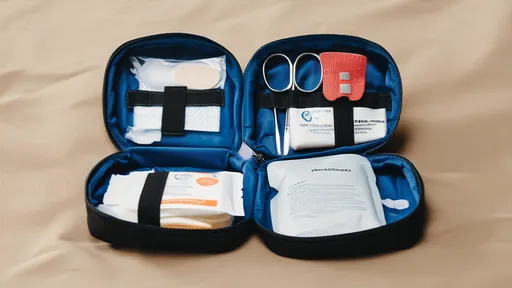
In the quiet corners of our homes, tucked away in closets or under bathroom sinks, rests a silent guardian of our well-being: the first aid kit. We assemble these kits with care, stocking them with bandages, antiseptics, and medications, believing we are prepared for minor emergencies. Yet, there is one component, often overlooked and quietly working in the background, that is crucial to the entire kit's integrity—the humble desiccant packet. These small, papery sachets, filled with moisture-absorbing material, are the unsung heroes preventing the degradation of our medical supplies. However, their effectiveness is not eternal, and understanding the critical importance of regularly updating these desiccants is a fundamental aspect of true preparedness.
The primary role of a desiccant within a first aid kit is to act as a shield against humidity. Moisture is the arch-nemesis of many medical items. It can render adhesive bandages useless, cause gauze pads to lose their sterility, and, most dangerously, lead to the deterioration of medications. Aspirin, for instance, can break down into salicylic acid and acetic acid (vinegar) when exposed to moisture, becoming not only ineffective but also a potential irritant. Antibiotic ointments can separate, and even the metal components of tools like tweezers or scissors can succumb to rust, compromising their function when you need them most. The desiccant packet silently battles this environmental threat, absorbing ambient moisture and maintaining a dry, stable microenvironment within the kit's container.
Despite their vital function, desiccants have a finite lifespan. They are not a "set it and forget it" solution. The silica gel or clay inside these packets has a maximum absorption capacity. Once saturated, they can no longer pull moisture from the air, and in worst-case scenarios, a full desiccant packet can even begin to release trapped moisture back into the container if temperatures rise significantly. This is why a periodic refresh is non-negotiable. The notion that the little packet that came with the kit years ago is still working is a dangerous assumption. Its effectiveness diminishes over time, slowly turning your first aid kit from a bastion of preparedness into a potential liability.
So, how does one know when it is time for a change? While many commercial desiccant packets come with color-changing indicators that shift from blue (dry) to pink (saturated), most generic packets do not. A good rule of thumb is to proactively replace them on a scheduled basis. Industry experts and preparedness professionals strongly recommend replacing the desiccants in your home first aid kit at least once a year. For those living in particularly humid climates, such as coastal regions, a more frequent schedule, perhaps every six to nine months, is advisable. If you ever open your kit and notice a musty smell, feel any dampness on packaging, or see signs of corrosion on tools, it is an immediate indicator that the desiccants failed long ago and that everything inside requires a thorough inspection and the desiccants an urgent replacement.
Procuring new desiccant packets is a straightforward process. They are readily available online, at hardware stores, or even found in the packaging of new products like electronics, shoes, or purses. While it might be tempting to reuse these "free" packets, caution is advised. You cannot be certain of their history or how much moisture they have already absorbed. For the critical job of protecting your health supplies, it is far better to purchase new, food-grade or pharmaceutical-grade silica gel packets in bulk. This ensures you know they start at peak effectiveness. When installing them, one larger packet or several smaller ones distributed throughout the kit is more effective than a single small packet buried at the bottom.
The process of updating your desiccants presents a perfect opportunity to conduct a comprehensive review of your entire first aid kit. This is a ritual every household should embrace. As you remove the old, spent packets, take a moment to examine every item. Check expiration dates on all medications, ointments, and even sterile items. Look for any tears in packaging that would compromise sterility. Ensure liquids have not leaked and that bandage adhesives are still strong. This biannual or annual check-up, triggered by the desiccant replacement, ensures that your entire kit is not just present, but truly prepared and functional for when an emergency arises.
Ultimately, maintaining a first aid kit is an act of care for yourself and your loved ones. It is a practical expression of the desire to be ready, to provide help and comfort in a moment of need. In this context, the simple act of swapping out a few small packets of silica gel transcends its simplicity. It becomes a symbolic and practical gesture of vigilance. It is the acknowledgment that preparedness is not a static state but a dynamic process requiring attention and maintenance. By giving this minor component its due importance, we honor the entire purpose of the kit. We ensure that when a small crisis occurs—a cut, a burn, a scrape—the tools we reach for are as reliable and effective as the day we placed them inside, kept perfectly preserved by the silent, watchful guard of a fresh desiccant.
By /Aug 26, 2025
By /Aug 26, 2025
By /Aug 26, 2025
By /Aug 26, 2025
By /Aug 26, 2025

By /Aug 26, 2025
By /Aug 26, 2025
By /Aug 26, 2025
By /Aug 26, 2025
By /Aug 26, 2025

By /Aug 26, 2025
By /Aug 26, 2025

By /Aug 26, 2025

By /Aug 26, 2025

By /Aug 26, 2025

By /Aug 26, 2025

By /Aug 26, 2025

By /Aug 26, 2025

By /Aug 26, 2025

By /Aug 26, 2025